

Iran
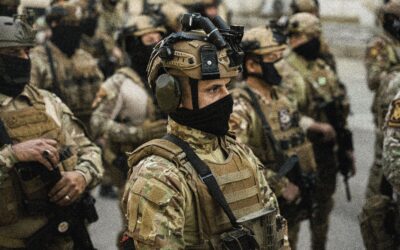
The 30-Day Failure: Trump’s 60-Day Iran Ceasefire Shatters at Halfway Mark as War Erupts in the Strait of Hormuz
The highly touted diplomatic window engineered to defuse total war in the Persian Gulf has completely collapsed. Exactly three weeks after the United States and the Islamic Republic of Iran signed a dramatic, 60-day Memorandum of Understanding (MOU) in Geneva, the performance-based truce has vanished. In its place is a ferocious, multi-front kinetic conflict for absolute physical sovereignty over the world’s most vital energy shipping artery. The provisional framework—brokered on June 17, 2026, to guarantee a 60-day window of toll-free commercial transit and halt open military campaigns—imploded at its precise halfway threshold. Following successive Iranian attacks on merchant vessels using an alternative southern shipping channel, President Donald Trump declared the diplomatic track officially “over” at the NATO summit in Ankara. Within days, the standoff transformed into full-scale air and maritime warfare. U.S. Central Command (CENTCOM) launched relentless waves of precision bombardments, hitting more than 300 Iranian military targets across consecutive nights. Concurrently, Washington has fully reinstated its crippling naval blockade on Iranian ports, drawing retaliatory ballistic missile barrages from Tehran against American bases throughout the region. At The Modern Memo, we break down the operational anatomy of the 300-target blitz, the maritime ambush that triggered the ceasefire’s demise, and the deepening economic shockwaves rippling through global energy security. The Five-Day Blitz: CENTCOM Pounds the Iranian Coastline The massive air operations carried out by the U.S. military represent a systematic effort to strip the Islamic Revolutionary Guard Corps (IRGC) of its ability to threaten civilian mariners. The Target Dragnet: Spanning five straight days of intensive bombardment, precision weapons launched from land- and sea-based fighter aircraft, unmanned drones, and naval warships targeted over 300 discrete military sites deep within Iran. Dismantling Infrastructure: CENTCOM confirmed the strikes successfully neutralized key IRGC coastal surveillance locations, primary communication networks, hidden cruise missile storage hubs on Greater Tunb Island, ammunition depots, and active surface-to-air defense systems. The Northern Escalation: For the first time in this phase of the war, U.S. strike networks expanded far north of the Persian Gulf. Air defense sirens and heavy explosions echoed directly throughout Iran’s capital city, Tehran, signaling a vast structural expansion of the American target list. The Undoing: Maritime Ambushes and the Toll Dispute The primary catalyst behind the sudden collapse of the June 17 ceasefire lies in a irreconcilable dispute over the legal and operational administration of the Strait of Hormuz. The underlying text of the MOU committed Iran to allowing safe passage at no charge for a strict duration of sixty days. However, the clerical regime quickly asserted that the language granted them the ultimate sovereign right to permanently manage and tax the waterway after the initial 60-day block expired. Rejecting this interpretation, the U.S. and its regional partners mapped a defensive, southern transit route running strictly through Omani territorial waters to bypass the Iranian perimeter entirely. When the IRGC’s naval branch launched successive drone and missile strikes against commercial container ships utilizing that specific channel—declaring the route “unapproved”—the truce permanently ruptured. The Blockade Re-Imposed: Firing on the Kharg Island Line With the peace agreement effectively dead, the White House ordered the U.S. Navy to immediately restore its total naval blockade on all primary Iranian shipping terminals. The enforcement of the renewed blockade has already turned lethal. On Thursday morning, U.S. naval forces fired multiple Hellfire missiles directly into the smokestack of an unladen oil tanker that had aggressively ignored repeated maritime warnings while attempting to break the blockade to reach Iran’s vital oil export hub at Kharg Island. Tehran has responded by widening the regional battlefield. The IRGC launched synchronized ballistic missile salvos targeting major Arab nations hosting American military assets. Severe damage was reported at Jordan’s Prince Hassan Air Base—where drone hangars were destroyed—while parallel strikes targeted the massive Al Udeid Air Base in Qatar, alongside U.S. logistics facilities in Kuwait, Oman, and Bahrain. The Energy Friction: Markets React to the Red Line The rapid transition from an interim truce back to a state of unrestricted maritime warfare has instantly reversed the temporary economic relief global consumers enjoyed in June. Economic Indicator June Ceasefire Baseline Present War Escalation (July 2026) Direct Consumer Threat Brent Crude Oil Dropped to a low of $69 / barrel post-signing. Ticked sharply back up, holding near $80 / barrel. Threatens an immediate, localized 10-15% increase in global fuel production costs. Waterway Traffic Began a gradual rise toward prewar levels. Plummeted to critically reduced, dangerous levels. Prompts international war insurers to freeze standard maritime coverage for the Gulf. Regional Transit toll-free arrangement for civilian hulls. IRGC declares the Strait “closed until further notice”. Spreads widespread fears of a prolonged, structural gridlock in the global energy supply. Military commanders in Tehran have drawn an unyielding line, warning that they will target the entire industrial and power infrastructure of the region if the United States continues to strike its soil. Col. Ebrahim Zolfaghari, speaking for Iran’s high military command, summarized the geopolitical deadlock: “Under no circumstances will we allow America to interfere in the Strait of Hormuz. This is Iran’s invincible red line.” Final Word The catastrophic collapse of the 60-day interim Iran deal at its exact halfway mark is the definitive proof that structural conflicts cannot be resolved with short-term diplomatic band-aids. When you look past the sterile, hopeful statements initially issued in Geneva and focus entirely on the hard data—more than 300 Iranian coastal and command targets systematically obliterated by CENTCOM, the immediate re-imposition of a total American naval blockade, and Tehran responding with ballistic missile strikes against five sovereign regional neighbors—you gain an unvarnished view of an inescapable reality. Quality information replaces the naive media narrative of an “imminent peace” with the cold truth of a prolonged war of attrition. The Trump administration attempted to use a temporary, 60-day pause to coerce the clerical regime into structural submission; instead, both sides have merely used the window to reload their weapons, and the resulting firestorm in the Strait of Hormuz ensures that the global economy will continue to pay the price…
The Arsenal Upgrade: Trump, Hegseth, and Wall Street Titans Mobilize Private Capital to Supercharge U.S. Weapon Stockpiles
The strategic race to rebuild America’s depleted military industrial base took a massive, multi-billion-dollar leap forward in Carlisle, Pennsylvania. Against the backdrop of a grinding regional war in Iran that has severely strained domestic stockpiles of advanced munitions, President Donald Trump, Defense Secretary Pete Hegseth, and the nation’s top military brass convened a high-stakes summit to structurally reshape how the United States funds battlefield technology. The 2026 Pennsylvania Defense and Innovation Summit, hosted at the U.S. Army War College and organized by U.S. Senator Dave McCormick (R-PA), marks the first time the executive branch has gathered elite defense tech innovators, military commanders, and global private equity kings under a single roof. The explicit goal: leveraging private markets to immediately bypass congressional gridlock, expand high-precision manufacturing, and deploy bleeding-edge automation to replenish critical defense reserves. At The Modern Memo, we detail the operational constraints driving the Carlisle summit, the corporate heavyweights pledging capital, and the technological blueprints deployed to revitalize the American defense industrial base. The Material Deficit: The Logistical Shadow of the Iran Conflict The urgency animating the War College summit is driven by a stark, unvarnished physical reality: the U.S. military is expending high-tech munitions faster than its legacy manufacturing pipelines can replace them. The Stockpile Strain: Continuous precision strikes and defensive naval engagements in the Middle East have dramatically reduced U.S. operational inventories of Tomahawk cruise missiles, as well as Patriot (PAC-3) and THAAD missile defense interceptors. The Strategic Timeline: A sobering Pentagon logistics analysis verified that domestic defense contractors will require a minimum of three years to replenish these specific arsenals to pre-conflict baselines. This manufacturing lag has sparked severe anxieties within the Joint Chiefs of Staff regarding America’s firepower readiness in the event of a secondary flashpoint with China over Taiwan. The Budgetary Bottleneck: While President Trump has aggressively proposed a historic $1.5 trillion defense budget for 2027 to fix the shortfall, the massive spending bill remains heavily gridlocked in Congress. The administration is utilizing the Pennsylvania summit to unlock private financing as an emergency stopgap to expand factory floors today. Unveiling the Carlisle Coalition: Wall Street Meets the War Department To supercharge supply chains, the administration has constructed an unprecedented alignment between traditional military procurement and the world’s most powerful financial institutions. The summit features a powerful cadre of national security leaders, including Defense Secretary Pete Hegseth, Joint Chiefs Chairman Gen. Dan Caine, Army Secretary Dan Driscoll, and CIA Director John Ratcliffe. Sitting directly across the table are corporate chiefs representing the absolute apex of global capital and manufacturing logistics: The Finance Guardians: JPMorgan Chase CEO Jamie Dimon and Blackstone President Jon Gray, coordinating private equity syndicates to back high-risk defense infrastructure expansions. The Prime Contractors: Lockheed Martin CEO Jim Taiclet, Boeing CEO Kelly Ortberg, and General Dynamics CEO Phebe Novakovic, aligning legacy assembly lines with new automated sub-contractors. The Disrupted Vanguard: Palantir CTO Shyam Sankar and SpaceX Director Antonio Gracias, spearheading the swift implementation of artificial intelligence, high-speed data networks, and next-generation launch logistics into the core defense grid. The Technology Blueprint: Automation over Bureaucracy Rather than pouring cash into inefficient, multi-year legacy projects, the capital partnerships announced in Carlisle are strictly focused on immediate, modular hardware scalability. Defense Innovator Pledged Investment / Asset Core Operational Objective ZeroEyes $10 Million Allocation Expands artificial intelligence and advanced machine learning research for threat detection. Gecko Robotics 10,000-Sq-Foot Advanced Facility Integrates autonomous robotics directly into manufacturing lines to fast-track hull and structural output. Palantir Technologies Proprietary AI Targeting Frameworks Streamlines raw data sorting to compress the time between target identification and missile deployment. “We have got to supercharge our supply chains to reduce how long it takes for new technology to be ready for widespread production,” explained Jake Loosararian, CEO of Gecko Robotics, emphasizing that the modern battlefield leaves zero room for multi-year regulatory delays. The initial private sector commitments are designed to immediately upgrade Pennsylvania’s industrial corridor, transforming the Commonwealth into a localized manufacturing hub for high-precision components and software-defined defense tools. Final Word The massive convergence of executive power, military command, and Wall Street capital at the U.S. Army War College is the definitive proof that the United States is fundamentally reinventing its national security apparatus to meet the demands of modern warfare. When you look past the standard political theater and focus entirely on the hard data—a critical three-year munitions deficit caused by hot operations in the Middle East, a historic $1.5 trillion defense proposal stalled in the legislature, and the immediate deployment of private capital to build automated, robotic manufacturing infrastructure—you gain an unvarnished view of a total strategic pivot. Quality information replaces the narrative of standard peacetime defense spending with the reality of an active economic mobilization. By cutting through administrative inertia and building a direct pipeline between innovators and high-finance investors, Donald Trump and Pete Hegseth have delivered an unyielding declaration to America’s adversaries: the American industrial engine is waking up, the era of defense supply stagnation is over, and the nation is building the capacity to defend its global interests through sheer technological dominance.

The Guardian Toll: Trump Reinstates Iran Blockade and Demands 20% Fee to Keep Strait of Hormuz Open
The operational standoff over the world’s most critical energy artery has escalated into a direct economic and military takeover. Following a massive weekend wave of U.S. airstrikes that hit roughly 140 targets across Iran, President Donald Trump officially declared the temporary, interim ceasefire dead, announcing a complete reimposition of the naval blockade on the Islamic Republic. In a characteristic and unprecedented policy shift announced Monday morning during a phone interview with Fox & Friends and detailed further on Truth Social, Trump proclaimed that the United States military would assume absolute control over the vital trade corridor. Declaring that the nation will henceforth be known as “THE GUARDIAN OF THE HORMUZ STRAIT,” the President announced that the U.S. will begin levying a mandatory 20% transit fee on all eligible commercial cargo passing through the waterway to reimburse Washington for the cost of securing the region. The drastic executive action has completely upended global maritime trade protocols, drawing immediate legal resistance from the United Nations and sending fresh shockwaves through international oil markets as the conflict slides back into full-scale kinetic warfare. At The Modern Memo, we break down the operational parameters of the U.S. Navy’s newly ordered port blockade, the financial math behind the 20% guardian toll, and the immediate multi-national legal resistance forming against Washington’s maritime decree. The Blockade Restored: Strangling the Iranian Port Grid The primary military directive signed by the President transitions U.S. forces from defensive escort missions to an aggressive, offensive stranglehold on Iran’s entire commercial shipping footprint. The Total Maritime Lockout: The U.S. Navy-led Joint Maritime Information Center confirmed that the blockade will formally commence at 20:00 GMT on Tuesday, July 14, 2026. The mandate covers all Iranian ports, coastal zones, and major crude oil terminals, legally barring any Iranian-flagged vessel or country doing business with Tehran from entering or exiting. The “Fair and Open” Exception: In his policy blueprint, Trump emphasized that the naval blockade is explicitly targeted, not a general shutdown of global shipping. “We are reinstating THE IRANIAN BLOCKADE, so named because it is only stopping Iran’s ships or customers from entering or leaving,” Trump posted. “All other countries will have fair and open use of the Strait.” The Preceding Kinetic Blast: The enforcement order arrives on the heels of devastating U.S. airstrikes that neutralized dozens of coastal threats, systematically erasing Iranian air defense networks, radar arrays, drone launch pads, and the IRGC fast-attack boat fleets that Tehran had previously deployed to assert control over the passage. The Guardian Toll: “We Expect to Be Reimbursed” The most disruptive element of the administration’s new Middle East strategy is the introduction of a premium security tariff imposed directly on global commerce. The 20% fee represents a massive geopolitical counter-strike against Iran’s recent attempts to establish a localized “Strait Authority” to tax merchant vessels. Trump made it clear that if American service members are going to absorb the physical risk of neutralizing Iranian aggression, foreign beneficiaries must foot the bill. “We’re going to keep the strait, and we’ll probably run it,” Trump told Fox & Friends. “Maybe we’ll call it the guardian angel of the strait. And we should be reimbursed for that… because the other nations are very wealthy. They’re on our side, and we can’t be expected to do that for nothing.” The collected revenues are slated to directly offset the ballooning operational costs incurred by CENTCOM naval deployments. The Legal and Diplomatic Chasm: UN Pushes Back While the White House frames the 20% fee as a matter of baseline structural fairness, the policy has triggered immediate, intense friction with international maritime organizations and even members of Trump’s own cabinet. Global Entity Official Position on Waterway Tolls Immediate Policy Impact International Maritime Organization (IMO) Stands firmly against any mandatory tolls used simply to transit international straits. Asserts there is no international legal basis to charge merchant ships for safe passage. European Union (EU) Foreign Policy Chief Kaja Kallas demands total freedom of navigation. Reaffirms that passage through the strait must remain free of arbitrary local charges. U.S. State Department Secretary Marco Rubio previously insisted international law bars any waterway fees. Creates an immediate internal diplomatic alignment challenge for U.S. envoys. The tension is particularly acute given that just last month in Bahrain, Secretary of State Marco Rubio explicitly told reporters that there was “zero support among the Gulf countries for any sort of toll or fees,” asserting that international law strictly guarantees unimpeded, non-discriminatory transit passage. By completely overriding existing global maritime conventions, the administration is betting that the physical reality of American naval dominance will force international shipping conglomerates to comply with the 20% toll, regardless of theoretical objections raised in Brussels or Geneva. Final Word The unilateral declaration of the United States as the sovereign “Guardian of the Hormuz Strait” is the definitive proof that the Trump administration has permanently discarded conventional international law in favor of raw transactional realism. When you look past the panic reverberating through European diplomatic suites and analyze the hard data—a total naval blockade of all Iranian ports taking effect tomorrow night, a 20% security fee levied on a passage that carries one-fifth of the world’s energy supply, and a decisive sequence of 140 airstrikes proving the U.S. possesses the absolute kinetic power to back its financial demands—you gain an unvarnished view of a total strategic reset. Quality information replaces the idealistic narrative of free global navigation with the cold reality of a fee-for-service security grid. Iran gambled that it could use its geographical proximity to hold global oil markets hostage; instead, Washington has physically seized the toll booth, ensuring that the clerical regime is completely starved of maritime revenues while forcing the rest of the world to pay the American military to keep the lights on.

The Blunt Weapon: Why Iran’s Geopolitical Energy Stranglehold Is Slipping Away
The definitive weapon in the Islamic Republic of Iran’s strategic arsenal—the ability to freeze the global economy by choking off the world’s most critical energy transit corridor—is systematically losing its kinetic power. For decades, Tehran has utilized the threat of a total maritime blockade in the Strait of Hormuz as an unyielding geopolitical shield against Western military and diplomatic pressure. However, fresh, highly anticipated forecasting data from the U.S. government indicates that the global energy infrastructure has achieved an unprecedented level of structural resilience, effectively blunting Iran’s leverage. According to the July 2026 Short-Term Energy Outlook (STEO) released by the U.S. Energy Information Administration (EIA), global crude oil production and trade patterns are on track to rebound to near pre-conflict levels by the end of this year. Despite ongoing instability, localized skirmishes, and deep anxieties in the Persian Gulf, global supply chains are adapting at a rapid pace—leaving Iran’s premier economic threat looking increasingly obsolete. At The Modern Memo, we break down the operational data behind the EIA’s upgraded energy forecast, the collapse of crude prices from their spring peaks, and the historic surge in domestic American energy production that has permanently rewritten the global balance of power. The EIA Metric: Shifting Back to Oversupply The primary shockwave hitting Tehran’s strategic planners is the speed with which international energy markets are normalizing, thoroughly frustrating the regime’s attempts to maintain an artificial supply crisis. The Production Rebound: The EIA officially boosted its worldwide production forecast, confirming that the vast majority of previously shut-in crude production will be successfully restored. While supply disruptions in the Gulf averaged a peak of 11.2 million barrels per day (b/d) in May, the agency projects that the market will fully return to its pre-conflict baseline by the close of December, with remaining bottlenecks entirely resolved in the first quarter of 2027. The Price Deflation: This rapid normalization has triggered an immediate, sharp retreat in global oil benchmarks. The Brent crude spot price, which skyrocketed to a punishing multi-year peak in April 2026, collapsed to an average of $85 per barrel in June. The Outyear Decline: The downward pressure is projected to intensify. The EIA’s modeling forecasts Brent averaging $74 per barrel for the third quarter of 2026, before plunging to an average of $65 per barrel across 2027 as accumulating international inventories plunge the energy sector straight back into a state of structural oversupply. Weaponizing the Pump: The Retail Correction The macro-level data translates into immediate, stabilizing relief for everyday American consumers, dismantling previous warnings of a $5.00-per-gallon summer crisis at the pump. The retail price correction is unfolding in real time. After peak fighting forced national retail gasoline prices to a staggering average of $4.48 per gallon in May, the EIA’s updated baseline projects average pump costs will drop to $3.80 per gallon in the third quarter, eventually settling around $3.40 per gallon by the fourth quarter of 2026. This downward trend is heavily driven by expanding wholesale margins and the conclusion of the peak summer driving season, leaving the White House with a much-needed domestic economic win ahead of the midterms. The American Fortress: 14 Million Barrels Per Day The underlying reason Iran can no longer successfully hold the global economy hostage through maritime disruption is simple: the United States has permanently consolidated its position as an unyielding, self-sustaining energy superpower. Core Energy Stream 2025 Baseline Metrics Provisional 2026 Projections Forecasted 2027 Baseline U.S. Crude Production 13.6 Million b/d 13.8 Million b/d 14.0 Million b/d U.S. LNG Exports 15 Billion Cubic Feet/day 17.2 Billion Cubic Feet/day 19.0 Billion Cubic Feet/day Henry Hub Spot Price $3.53 / MMBtu $3.67 / MMBtu $3.49 / MMBtu The data tells the story of a total domestic drilling revolution. Under the administration’s aggressive pro-exploration directives, U.S. crude oil production is expanding to historic, record-shattering thresholds, averaging 13.8 million b/d this year and scaling to an unprecedented 14.0 million b/d in 2027. Concurrently, American liquefied natural gas (LNG) exports are projected to surge to 19 billion cubic feet per day over the next 18 months. By flooding the international market with reliable, Western-extracted fossil fuels, Washington has created a massive logistical buffer that dilutes the strategic impact of any localized embargo or military ambush in the Persian Gulf. Final Word The upgraded EIA energy forecast is the definitive proof that Iran’s ability to weaponize the global oil supply has officially passed its expiration date. When you look past the theatrical, apocalyptic warnings broadcast by the corporate media and focus entirely on the hard data—global crude supply patterns rebounding to near pre-conflict baselines in under six months, Brent crude prices dropping from their April peaks to a projected $65 per barrel, and the United States scaling its domestic output to an unprecedented 14 million barrels per day—you gain an unvarnished view of a failed geopolitical extortion campaign. Quality information replaces the fear of a global energy collapse with the cold reality of a structural oversupply. The clerical regime in Tehran gambled that it could paralyze Western resolve by threatening the choke points of the Middle East; instead, American roughnecks and international logistics networks have closed the gap, ensuring that the world can insulate itself from rogue states while driving the cost of fuel down for everyday citizens.

The Bürgenstock Blueprint: U.S. and Iran Agree to 60-Day Peace Roadmap in Switzerland Despite Trump Threat Matrix
The high-stakes brinkmanship shadowing the Persian Gulf has yielded a remarkable, if highly fragile, diplomatic breakthrough. Following an intensive 18-hour negotiating marathon at the Bürgenstock luxury resort overlooking Lake Lucerne, Switzerland, U.S. and Iranian delegations officially concluded their first round of high-level peace talks by locking in a formal 60-day roadmap toward a comprehensive treaty to end the regional war. The summit—orchestrated under the joint mediation of Pakistan and Qatar—produced immediate, tangible structural guardrails designed to de-escalate the Middle Eastern theater. Chief among the breakthroughs is the creation of a direct military hotline to secure the volatile Strait of Hormuz and a “de-confliction cell” aimed at arresting the war in Lebanon. At The Modern Memo, we break down the operational mechanics of the Bürgenstock blueprint, the immediate sanctions waivers issued by the U.S. Treasury, and the profound policy contradictions between Vice President J.D. Vance’s diplomatic engagement and President Trump’s digital warnings. The Bürgenstock Deliverables: Hotlines and De-Confliction Cells The joint statement released by Pakistani and Qatari facilitators on Monday, June 22, 2026, details a structured framework designed to translate last week’s raw 14-point Versailles Memorandum of Understanding (MOU) into verifiable technical milestones. The 60-Day Runway: The high-level committee established a strict two-month timeline to resolve foundational disputes regarding Iran’s nuclear enrichment limits and long-term economic reintegration. While the principal political leaders have wrapped their initial sessions, lower-level technical working groups remain embedded in Switzerland to flesh out compliance tracking. The Hormuz Safety Valve: To mitigate immediate global energy shocks, the roadmap introduces a dedicated communication line between the U.S. Navy and the Islamic Revolutionary Guard Corps (IRGC). The channel serves as an emergency safety valve to prevent tactical miscalculations inside the world’s most critical oil chokepoint. Iran has pledged its “best efforts” to ensure the safe passage of commercial vessels, walking back a tense weekend threat to close the waterway. The Lebanon Buffer: Recognizing that proxy warfare could easily torpedo the talks, the framework introduces a localized de-confliction cell involving the Lebanese government. This mechanism aims to enforce a sustainable termination of military operations between Israel and Hezbollah, providing the essential geopolitical stability required for broader diplomacy to survive. The Economic Injections: Waiving the Oil Blockade To prove Washington’s immediate material commitment to the roadmap, the executive branch authorized swift, high-impact economic relief mechanisms right as the high-level talks concluded. The 60-Day Oil License: The U.S. Treasury officially issued a dynamic 60-day general license waiving structural sanctions targeting Iranian petroleum. The temporary mandate legally authorizes the production, delivery, and transparent commercial sale of Iranian crude through August 21, 2026—a move market analysts predict will instantly suppress global energy prices. The Assets and Reconstruction Framework: Iranian Foreign Minister Abbas Araghchi took to social media to celebrate what he termed a “major structural shift,” asserting that the U.S. had agreed to lift port blockades, release a portion of frozen sovereign financial assets, and support an expansive post-war reconstruction and development plan for the Iranian domestic market. The Double-Track Strategy: Vance’s Diplomacy vs. Trump’s Bombers The primary variable threatening the durability of the Bürgenstock roadmap is the starkly polarized messaging strategy simultaneously deployed by the White House and its negotiating team in the field. While Vice President J.D. Vance—who personally led the U.S. team alongside Jared Kushner—praised the Swiss talks as having established a “good foundation for a successful final house,” President Trump maintained a hyper-aggressive public posture on social media. Trump explicitly warned Tehran that if its regional proxies continued to instigate clashes in Lebanon, the U.S. military would resume targeted bombings. “If they don’t, we’ll hit Iran very hard again, just like we did last week, only harder!!!” Trump posted. The bellicose rhetoric briefly derailed direct talks, prompting Iranian Lead Negotiator Mohammad Bagher Ghalibaf to walk out of a session in protest before returning via international mediators. Ghalibaf issued a sharp warning of his own, advising the White House to be “careful with their statements” and noting that Iran’s armed forces are fully prepared to respond to any resumption of American hostility. Final Word The finalization of the 60-day Bürgenstock roadmap is the definitive proof that the administration is executing a classic double-track strategy: using Vice President Vance to methodically construct a complex diplomatic exit ramp while President Trump holds a cocked military revolver to the adversary’s head. When you look past the theatrical public warnings and examine the raw financial and structural metrics—a legally binding 60-day timeline backed by the immediate lifting of oil sanctions, the institutionalization of a direct naval hotline in the Strait, and an explicit de-confliction framework for Lebanon—you gain an unvarnished view of a superpower systematically locking in its leverage. Quality information replaces the fear of an inevitable regional war with the reality of highly calculated transactional diplomacy. Washington has successfully brought Tehran to a written schedule; the next two months will prove whether this roadmap is the foundation of a historic peace, or merely a temporary pause before the bombers are ordered back into the sky.

The Propaganda Battle: Trump Slams ‘Dishonorable’ Iranian Leaks as Fake News, Denying Major Concessions
The diplomatic tightrope between Washington and Tehran has degenerated into an aggressive, public war of words. Less than twenty-four hours after abruptly halting a massive U.S. airstrike package to allow space for a peace accord, President Donald Trump aggressively pushed back against a wave of media leaks originating from Iranian state television. Trump blasted the purported terms published in the Middle East as flat-out “Fake News,” accusing Tehran’s envoys of acting in profound bad faith to salvage public perception at home. At The Modern Memo, we contrast the contradictory terms leaked by Tehran against the White House’s strict performance blueprint, look at Vice President J.D. Vance’s rejection of a “cash-for-peace” giveaway, and examine the fresh drone skirmishes keeping the Strait of Hormuz on a knife’s edge. The Truth Social Broadside: “No Relation to the Truth” The diplomatic whiplash peaked on Friday morning when President Trump took to his Truth Social platform to utterly disavow the narrative being pushed by the official Islamic Republic News Agency (IRNA). The Written Boundaries: Trump explicitly stated that the public leaks completely distorted what had actually been negotiated behind closed doors. “The terms that Iran leaked out to the Fake News have NOTHING to do with the terms that were agreed to, in writing,” Trump wrote. The Character Rejection: Refusing to mince words, the president tore into the integrity of his Iranian counterparts. “What they said, including their weak and pathetic statement on having a deal, bears no relation to the truth,” Trump continued. “Very dishonorable people to deal with. With them, there is no such thing as dealing in good faith. AMAZING!” The Islamabad Framework: While the baseline text of the tentative “Islamabad Memorandum of Understanding” was hammered out by phone through international mediators, the public rollout has dissolved into a chaotic messaging war as both regimes attempt to sell the framework to their domestic audiences. Dueling Realities: What Iran Claimed vs. What the White House Demands The severe friction stems from two radically different portrayals of the draft agreement, highlighting major structural contradictions regarding nuclear concessions, funding, and maritime control. Leaked Iranian Narrative (IRNA / Mehr) The Actual White House Performance Blueprint $24 Billion Cash Release: Iran claimed the immediate unfreezing of $24 billion in blocked foreign assets. Zero Immediate Cash: No funds are released up front. Economic benefits only flow after strict verification metrics are met. Sovereign Strait Control: Tehran asserted it retains absolute authority and management over the Strait of Hormuz. Guaranteed Reopening: The Strait will be permanently opened to international shipping under a strict performance mandate. Preserving Enrichment Rights: State media insisted Iran will not give up its fundamental right to enrich uranium. Dismantling the Grid: The U.S. mandate requires all enriched nuclear material to be destroyed or removed, and the program dismantled. Proxy Funding Untouched: Leaks claimed the deal explicitly excludes Iran’s regional resistance networks and missile systems. Cutting Off Terror Capital: The blueprint legally binds Iran to completely halt all funding to regional proxy terror groups. The Vance Clarification: No Pre-Paid Blank Checks As political critics at home—including key Senate Republicans—sounded the alarm that the administration was preparing a weak, concession-heavy bailout, Vice President J.D. Vance stepped into the fray to anchor the administration’s red lines. Shattering the Fake Information: “I’m seeing a lot of fake information about a potential deal to reopen the Strait and end Iran’s nuclear weapons program,” Vance wrote on social media. The Performance Anchor: Vance categorically denied that Washington was handing Iran a financial windfall just for showing up. “First, the Iranians are not receiving any cash, and no funds are being released for simply signing a deal or attending a meeting,” Vance emphasized. Remaking the Region: The Vice President reinforced that the transaction is entirely “performance-based,” meaning that economic relief is downstream of absolute compliance. If implemented correctly, Vance argued the layout has “the potential to remake the region and lead to lasting peace,” but only on American and allied terms. Midnight Clashes: A Drone Attack on Commercial Shipping Proving that the situation on the water remains completely volatile despite the diplomatic breakthrough, a fresh military flashpoint erupted in the Gulf overnight. The Assault on Indian Vessels: In his Friday morning address, President Trump revealed that Iranian forces attempted a drone raid targeting commercial shipping. “Also, their totally rebuffed Drone attack last night against Indian Ships leaving the Hormuz Strait is TOTALLY UNACCEPTABLE,” Trump warned. The Defensive Shield: U.S. naval assets operating in the area successfully intercepted and downed a pair of one-way attack drones before they could strike the commercial targets. The Final Warning: The late-night escalation drew a sharp, final warning from the commander-in-chief, who signaled his patience has completely evaporated. “They better get their act together, and FAST!” Trump added, leaving the military option squarely on the table if Tehran continues to play double games. Final Word The explosive rollout of the Islamabad Memorandum of Understanding is the definitive proof that negotiating with a rogue regime is an exercise in structural deception. When you look past the noise of Iranian state media spin and focus entirely on the hard data—a president openly calling his negotiating partners ‘dishonorable’, a Vice President explicitly confirming that zero cash will be handed over, and U.S. warships actively shooting down Iranian drones overnight—you gain a clear picture of a deal built on extreme leverage, not mutual trust. Quality information replaces the illusion of an easy diplomatic victory with the reality of an aggressive, performance-enforced probation. It allows you to see that while Iranian negotiators are trying to mask a total structural retreat with empty public posturing, Trump has pinned them to a written, unyielding corner. By drawing a hard line against these desperate leaks, Washington has reminded Tehran of the ultimate geopolitical equation: if you lie about the terms on paper, the bombers will be back in the air before the ink can dry.
The Master Dealmaker’s Brake: Trump Abruptly Cancels Massive Iran Strike Package, Claiming Near-Certain Peace Agreement
The high-stakes game of geopolitical chicken between Washington and Tehran took its most dramatic, unexpected turn yet. Hours after vowing to unleash an devastating wave of military bombings that would hit the Islamic Republic “VERY HARD TONIGHT”, President Donald Trump abruptly pulled the plug on the scheduled operation. Taking to social media, Trump revealed that he issued a last-minute cancellation order after receiving direct confirmation that negotiations had successfully breached the highest echelons of the Iranian regime. The president boldly declared that the foundational components of a historic transaction have been approved by a massive multi-national coalition, signaling an imminent end to the localized war. At The Modern Memo, we break down the dramatic 24-hour timeline that brought the U.S. to the brink of a massive escalation, the structural terms of the purported draft agreement, and the permanent naval stranglehold Trump is maintaining until the ink dries. The Brink of Devastation: Threatening Kharg Island The sudden de-escalation followed an intense, multi-day military build-up characterized by direct hits on Iranian energy infrastructure and a dramatic escalation of public rhetoric. The Stalled Ultimatum: On Wednesday, Trump declared that regional ceasefires had become effectively “meaningless” over Tehran’s refusal to lock in a permanent peace deal. Following a series of retaliatory strikes executed by U.S. Central Command (CENTCOM) against Iranian radar and surveillance hubs, Trump warned that a massive, secondary air campaign was finalized for Thursday night. Targeting the Economic Core: In a series of provocative statements, Trump laid bare his ultimate preference: seizing control of Kharg Island, the vital heart of Iran’s domestic oil industry through which roughly 90% of its petroleum exports flow. “At some point in the not too distant future, we will be taking Kharg Island, and other oil infrastructure points, and assume total control of their Oil and Gas Markets,” Trump had warned. The “Appetite” Restraint: Despite the heavy posturing, Trump pulled back from a full land-invasion narrative during a Thursday phone interview with Fox News, acknowledging a desire to avoid an endless military occupation. “My preference has always been to take Kharg Island,” Trump told the network. “I don’t know that America has the stomach for it to be honest… I don’t want to have boots on the ground.” The Truth Social Pivot: Citing a Breakthrough at the Top Just as fighter jets were preparing for deployment, Trump completely shifted the regional dynamic with an emergency declaration posted to Truth Social, announcing that the planned bombings were officially stood down. “Based on the fact that discussions with the Islamic Republic of Iran have been brought to the highest level of Iranian leadership and approved, I have, as President of the United States of America, cancelled the scheduled strikes and bombings against Iran this evening,” Trump announced. The Multi-National Blueprint: The president insisted that the final points and structural concepts of a comprehensive peace package have been vetted “in both concept and great detail” by an expansive roster of regional powers. According to Trump, the parameters have already received explicit sign-offs from the United States, Israel, Saudi Arabia, the UAE, Qatar, Turkey, Pakistan, Bahrain, Kuwait, Jordan, and Egypt. The Proposed Pillars: While Iranian state media has remained conspicuously quiet regarding a final endorsement, diplomatic mediators close to the talks indicate the draft agreement rests on three strict pillars: a formalized extension of regional ceasefires, the immediate reopening of the Strait of Hormuz to international shipping, and the launch of an aggressive, 60-day negotiation window strictly focused on dismantling Iran’s nuclear enrichment capabilities. A Deal on Deck: Trump concluded his statement by teasing another signature foreign policy triumph, noting that the specific “time and place of the signing to be announced shortly”. Maximum Pressure Remains: The Stranglehold Extends While the bombs are staying on their racks for now, the administration made it explicitly clear that Washington is not letting its guard down or offering pre-signature concessions to Tehran. The Blockade Stands: Trump issued a stern warning to Iranian commanders that any attempt to stall or exploit the pause will result in an immediate resumption of hostilities. “The Naval Blockade will remain in full force and effect until this Transaction is finalized,” Trump emphasized, guaranteeing that Iranian oil vessels attempting to break the defensive line will continue to be aggressively intercepted by U.S. warships. Draining Frozen Accounts: To reinforce the economic pain of the maximum pressure campaign, U.S. Treasury Secretary Scott Bessent announced a new punitive financial directive. The U.S. will begin actively extracting funds directly from frozen Iranian bank accounts to offset the exact costs of military damage sustained by American regional allies—such as Jordan, Bahrain, and Kuwait—during previous proxy missile exchanges. Final Word The eleventh-hour cancellation of the Iranian strike package is the definitive proof of the Trump Doctrine in action: utilizing the credible threat of total economic and military annihilation to force an adversary to the negotiating table. When you look past the whiplash of the fast-moving news cycle and focus on the raw data—a target package that included the core of Iran’s oil economy stood down at the absolute zero hour, a 12-nation consensus claim approved by regional partners, and a heavy naval blockade remaining firmly locked in place—you gain an unvarnished view of high-stakes transactional diplomacy. Quality information replaces the fear of an endless Middle Eastern quagmire with the cold reality of a calculated leverage play. It allows you to see that while Trump prefers the theater of a signing ceremony, the threat of flattening Kharg Island remains fully loaded on the Resolute Desk. By choosing to pause the bombers, Washington has handed Tehran one final, ultimate choice: sign the deal, or watch your entire economic lifeline evaporate overnight.
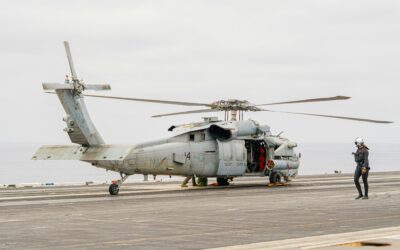
The Proportional Hammer: U.S. Jets Flatten Iranian Air Defenses After Hormuz Helicopter Ambush
The fragile regional peace between Washington and Tehran completely went up in flames. Following the downing of a U.S. Army AH-64 Apache attack helicopter by an Iranian Shahed-type drone over the Strait of Hormuz, President Donald Trump made good on his promise of swift retaliation. At the President’s direct command, U.S. Central Command (CENTCOM) unleashed a massive, concentrated wave of precision airstrikes against strategic military assets deep inside sovereign Iranian territory. The kinetic exchange marks the most severe disruption to the region’s shaky ceasefire since it was implemented, turning the strategic waterways of the Persian Gulf back into an active combat theater. At The Modern Memo, we break down the raw operational metrics of the American bombing run, the locations left in ruins along Iran’s coast, and the high-stakes political math defining Trump’s “powerful” message to the Islamic Republic. The Retaliation: Blasting the Radar Grid The operation, executed under the umbrella of the U.S. military’s ongoing campaign—Operation Epic Fury—began precisely at 5:00 p.m. Eastern Time (after midnight local time in Iran) and concluded after a devastating four-hour window. The Strike Package: Utilizing a combined arm of U.S. Air Force and Navy fighter jets—including F-16 Fighting Falcons and carrier-launched F/A-18F Super Hornets—the military deployment targeted a total of nearly 20 distinct strategic infrastructure sites along Iran’s southern coast. The Target Profile: CENTCOM confirmed that precision-guided munitions systematically neutralized primary Iranian air defense nodes, surface-to-air missile batteries, ground control stations used to pilot attack drones, and long-range surveillance radar sites tracking the Strait of Hormuz. The Destruction Zones: Open-source intelligence reports and satellite data confirmed massive secondary explosions lighting up the night sky near the heavily fortified Iranian port cities of Jask and Bandar Abbas, as well as critical military facilities embedded on Qeshm Island. The Trump Doctrine: A “Warning Shot” to Enforce a Deal Speaking to reporters on Tuesday evening following the conclusion of the bombing run, President Trump fiercely defended the military intervention, shifting his rhetoric from flexible diplomacy to unyielding deterrence. The Strong Message: “I believe the response should be very strong, very powerful,” Trump stated, confirming he personally authorized the strike package the moment intelligence established a Shahed drone caused the Apache crash. “The operation was a proportional response to recent attacks on U.S. forces and international commercial ships transiting regional waters.” The “Not a Big Deal” Paradox: While Trump authorized a heavy kinetic response, he simultaneously sought to downplay the crisis to preserve his broader foreign policy goals, telling media outlets that the downing itself “wasn’t a big deal” because the two American pilots were successfully rescued by a Task Force 59 Corsair sea drone. The Final Throes Strategy: White House insiders note the strikes were intentionally engineered as a severe “warning shot” rather than the start of a regime-change campaign. Trump insists the U.S. remains in the “final throes of what will be a very, very good deal” to permanently entomb Iran’s nuclear enrichment capabilities, using the swift destruction of their coastal radars to show Tehran exactly what will happen to their entire infrastructure if they walk away from the negotiating table. The Escalation Sequence: Tehran Fires Back The American strikes did not occur in a vacuum. Refusing to absorb the blow silently, the Islamic Revolutionary Guard Corps (IRGC) instantly activated its regional proxy network, triggering a massive, multi-theater missile and drone exchange across the Middle East. The Regional Firefight: Hours after the U.S. jets returned to their bases, Iran launched a coordinated barrage of ballistic missiles and one-way attack drones targeting American and allied military installations across neighboring countries. The Interception Metrics: Defense officials confirmed that the overwhelming majority of the incoming Iranian assets were successfully intercepted by regional air shields. The Jordanian military confirmed its air defenses shot down five incoming Iranian missiles targeting the Muwaffaq Salti Air Base—which hosts American F-35 fighter jets—while base alerts were also triggered across Kuwait and Bahrain. No American casualties or significant infrastructure damage have been reported. The Diplomatic Fallout: The exchange has pushed regional diplomacy to the absolute brink. Iranian Foreign Minister Abbas Araghchi took to social media to warn that Tehran “will leave no attack or threat unanswered,” threatening Gulf nations that allow the U.S. to use their airspace. Meanwhile, Iranian negotiators in Islamabad announced they are officially “reviewing” whether to permanently freeze all ongoing peace talks with Washington. Final Word The U.S. precision strikes inside Iran are the definitive proof that the Trump administration will not allow a diplomatic transition to be used as an open season on American service members. When you look past the noise of the “proportional response” messaging and focus entirely on the hard data—nearly 20 Iranian military targets vaporized in four hours, five Iranian missiles shot down over Jordan, and a multi-billion-dollar nuclear negotiation dangling by a thread—you gain a clear picture of a superpower enforcing boundaries at the edge of a bayonet. Quality information replaces the illusion of a stable regional ceasefire with the reality of a high-stakes geopolitical poker game. It allows you to see that while Trump wants to sign a historic accord and exit the region, he is entirely willing to flatten Iran’s defensive architecture to protect American military credibility. By turning the radar stations of Bandar Abbas to rubble, Washington has delivered an uncompromised mathematical reality to Tehran: the cost of hunting an American helicopter is the systematic dismantling of your own sky shield.
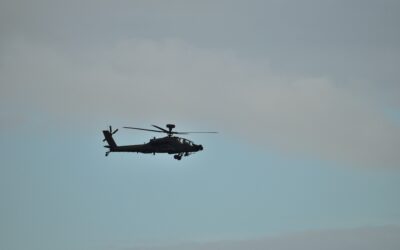
The Hormuz Ambush: Trump Vows Retaliation After Iranian Drone Downs U.S. Apache Helicopter
A fragile regional ceasefire completely shattered over the Persian Gulf. In an escalation that threatens to plunge the Middle East back into all-out war, President Donald Trump announced that Iranian forces shot down a U.S. Army AH-64 Apache attack helicopter patrolling near the strategic Strait of Hormuz. While initial military reports were guarded, U.S. defense officials subsequently confirmed that Iran utilized an uncrewed aerial vehicle (UAV) to down the American aircraft off the coast of Oman. The high-stakes shootdown occurred just hours after Trump declared that long-sought peace negotiations with Tehran were in their “final throes.” At The Modern Memo, we break down the tactical data behind this unprecedented drone-on-helicopter engagement, the historic maritime robotic rescue that saved the American crew, and the retaliatory options sitting on the Resolute Desk. The Engagement: A Drone In The Dark The shootdown materialized around 3:30 a.m. local time on Tuesday during a routine maritime patrol mission conducted by the U.S. Army’s attack helicopter fleet. The Fateful Patrol: The AH-64 Apache—the heavy backbone of American low-altitude deterrence in the gulf—was flying a defensive perimeter to cover commercial shipping vessels navigating the narrow chokehold of the Strait of Hormuz. The Drone Strike: Two U.S. defense officials confirmed that an Iranian drone was the kinetic mechanism responsible for taking down the multi-million-dollar attack helicopter. Investigators are actively parsing telemetry data to determine whether the Iranian drone executed a deliberate ramming maneuver or deployed specialized air-to-air munitions to destroy the helicopter’s rotor systems. The War of Attrition: The loss adds to a growing list of American hardware consumed by the conflict. A Congressional Research Service report reveals that the U.S. military has lost or sustained damage to dozens of aircraft since major hostilites erupted on February 28, highlighting the extreme lethality of Iran’s layered asymmetric air defense network. The Rescue: First-Ever Sea Drone Recovery While the loss of the aircraft is a major strategic blow, the survival of the crew has been hailed as a triumph of cutting-edge robotic warfare, marking a definitive first in the history of the United States Armed Forces. The Search Window: Following the impact, both Army aviators managed to successfully emergency-land or eject into the dark waters off the coast of Oman. Stranded in hostile territory, a frantic countdown began to locate the airmen before Iranian fast boats could capture them. Task Force 59 Steps In: Operating out of the U.S. Fifth Fleet in Bahrain, the military deployed a Saronic Corsair unmanned surface vessel (USV)—a high-tech autonomous sea drone operated by the elite Task Force 59. The Operation: Within approximately two hours, the autonomous sea drone successfully localized the two pilots, pulled them from the water, and transported them to a secure maritime staging point where a crewed helicopter hoisted them to safety. U.S. Central Command (CENTCOM) confirmed both soldiers are currently in stable, uninjured condition. The Trump Ultimatum: “Of Necessity, Respond” The downing of the Apache has completely upended Washington’s diplomatic calculus, forcing President Trump to shift from projecting imminent peace to projecting overwhelming military deterrence. The Truth Social Threat: Taking to social media on Tuesday morning, Trump directly blamed Tehran for the assault. “I have just been informed by our Great Military that last night the Iranians shot down one of our highly sophisticated Apache Helicopters while patrolling over the Strait of Hormuz,” Trump wrote. “There were two pilots involved, both are safe and uninjured. Nevertheless, the United States must, of necessity, respond to this attack.” The Stalled Accord: The attack directly torpedoes a wave of diplomatic optimism. Just hours prior, while speaking to journalists at JFK International Airport after watching the NBA Finals, Trump insisted that a comprehensive peace deal with Iran was “largely negotiated” and could be signed within “two or three days.” The Bombing Option: Trump laid bare the stark choices now facing his administration, warning Tehran that the U.S. possesses the immediate capability to decisively flatten its remaining leadership structure. “If we go and bomb—which we could do very easily if we want, and we spend another two or three weeks bombing—they’ll have nothing left whatsoever,” Trump warned, though he noted a massive kinetic campaign would keep the vital oil transit strait locked down for months. Final Word The downing of an American Apache helicopter by an Iranian drone is the definitive proof that Tehran views diplomatic negotiations as a weakness to be exploited rather than a pathway to peace. When you look past the noise of the “final throes” peace rhetoric and focus entirely on the hard data—a U.S. attack helicopter dragged out of the sky, an unprecedented rescue executed entirely by autonomous sea drones, and an adversary willing to strike U.S. assets during a active ceasefire window—you gain an unvarnished view of a geopolitical conflict that cannot be solved by a handshake. Quality information replaces the illusion of a diplomatic breakthrough with the reality of an unyielding proxy war. It allows you to see that while Trump prefers a historic signing ceremony, the Islamic Revolutionary Guard Corps is only interested in testing American resolve. By promising an uncompromised, necessary response, the administration must now prove that the cost of striking an American pilot is a price the Iranian regime simply cannot afford to pay.
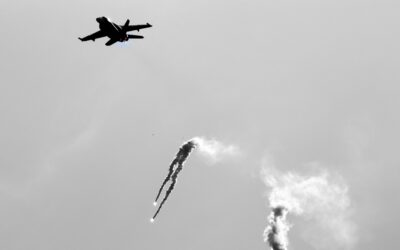
The Ceasefire Fiction: U.S. and Split Iranian Regime Trade Heavy Air Strikes as Diplomatic Track Stalls
The fragile, highly scrutinized ceasefire in the Persian Gulf effectively collapsed into a nominal fiction over the weekend. Despite a supposed truce brokered back in April, the United States and Iran engaged in a series of intense, tit-for-tat airstrikes across regional waters. The kinetic escalation comes as high-stakes diplomatic talks in Islamabad hit a total standstill, exposing deep, functional fractures within Tehran’s ruling elite. At The Modern Memo, we analyze the raw operational data behind the weekend’s naval and air engagements, the shifting terms paralyzing negotiators, and how a divided Iranian regime is playing a dangerous double game on the world stage. The Weekend Exchanges: Drone Clashes and Air Base Retaliation The illusion of a quiet maritime truce dissolved rapidly following an aggressive aerial encounter over international waters, forcing U.S. Central Command (CENTCOM) to order immediate, targeted counter-strikes along Iran’s Gulf coast. The MQ-1 Shootdown: The escalation sequence began when Iranian air defense assets targeted and successfully shot down an uncrewed U.S. MQ-1 surveillance drone operating entirely within international airspace over regional waters. The CENTCOM Response: In swift retaliation, U.S. fighter aircraft launched precision strikes along Iran’s vulnerable coast. CENTCOM confirmed the systematic elimination of multiple Iranian air defense nodes, an IRGC ground control station, and two one-way attack drones that posed an immediate, physical threat to commercial shipping transiting international corridors. The Base Strike Counter: By Monday morning, Iran’s Islamic Revolutionary Guard Corps (IRGC) claimed it had retaliated by targeting a regional airbase utilized by American forces—believed by defense analysts to be located in Kuwait. The Kuwaiti Foreign Ministry confirmed it had actively repelled drone and missile attacks, reserving the right to take “all necessary measures” to safeguard its sovereign territory. The Diplomatic Bottleneck: The Nuclear Hardline The battlefield friction directly mirrors the total gridlock paralyzing Pakistani- and Qatari-mediated peace talks. Draft proposals aimed to implement a stable 60-day extension of the April truce, but the diplomatic track has completely stalled due to fundamental disagreements over long-term strategic concessions. The Trump Ultimatum: During a critical Situation Room briefing, the White House explicitly demanded a hardening of terms. The administration is refusing to sign off on an extension or authorize the unfreezing of assets without tougher, uncompromised language restricting Iran’s domestic uranium enrichment and nuclear program. The Transponder Shuffle: While the diplomats bicker, commercial reality forces compliance. U.S. naval forces have quietly helped coordinate the passage of roughly 70 commercial vessels through the tight chokehold of the Strait of Hormuz. To survive the transit and escape IRGC detection, the vast majority of these vessels are running dark, completely turning off their electronic transponders. A Regime Divided: The Frontline Contradiction The escalating violence exposes a severe structural fracture inside Tehran, where diplomatic officials are trying to spin a narrative of comprehensive peace while hardline military factions intentionally provoke conflict. The Total Truce Claim: On Monday, Iranian Foreign Minister Abbas Araghchi took to social media to aggressively assert that the U.S. ceasefire is unequivocal and covers “all fronts, including in Lebanon.” Araghchi warned that any Western or Israeli escalation on the northern front would be treated as a total breach of the agreement. The Proxy Realities: This diplomatic posture stands in direct contradiction to the actions of the IRGC and its regional proxies. Even as Araghchi claimed the truce covers Lebanon, Israeli Prime Minister Benjamin Netanyahu ordered a sweeping expansion of defensive airstrikes targeting Hezbollah infrastructure north of the Litani River and into the southern suburbs of Beirut, citing continuous violations by the Iran-backed militant group. The Strategic Trap: Defense analysts point out that the Iranian regime is attempting to use the U.S. ceasefire as a legal shield to protect its proxy network from being systematically dismantled. By threatening “consequences” for actions in Lebanon while simultaneously shooting down U.S. drones in the Gulf, Tehran’s fractured leadership is betting that Washington lacks the appetite for a wider, unconstrained war. Final Word The weekend’s violent exchange of airstrikes is the definitive proof that a ceasefire written on paper is completely useless when one side is run by a divided, duplicitous regime. When you look past the noise of diplomatic messaging and focus on the data—a downed American MQ-1 drone, neutralized Iranian air defenses, and 70 commercial ships forced to run dark through the Strait of Hormuz—you gain a clearer picture of a geopolitical conflict approaching a definitive tipping point. Quality information replaces the progressive fantasy of a stable, open-ended truce with the reality of an aggressive adversary testing boundaries. It allows you to see that while the Iranian foreign ministry talks about regional peace, the IRGC is actively launching missiles at American allies. By refusing to tolerate these gray-zone provocations, the administration has made it clear that the United States will protect its assets and allies—regardless of whether Tehran’s diplomats are ready to face reality.